Dedication, perseverance and willpower proved to be a winning combination for the Vaughn College Robotics Team as they discovered the right formula to qualify for the VEX Robotics World Championship 2021 amidst the COVID-19 pandemic. We caught up with Timothy Tullio, team president, and Maharshi Patel, vice president, to hear how the team switched gears to maintain their focus while keeping things “business as usual.”
A different kind of competition
The VEX robotics engineering competition was structured differently this year. Tullio described the competition as more of a “skills event” as the teams played against themselves as an “us versus the clock” scenario. Their scores were then compared to other teams who also competed virtually around the world. The team described this year’s game as “Tic-Tac-Toe meets Connect Four.” The goal was to score as many points as possible in one minute. The more rows the team was able to connect, the more points they earned.
Building up to the competition
Tullio and Patel agreed that the element of strategy was similar to last year’s competition, but managing the room was completely different. Due to social distancing protocols, only six team members were permitted in the room at the same time. They said keeping the groups small helped to build a stronger relationship between team members. “When we weren’t in a Zoom class, we were working on the robots. From the time we woke up until bedtime, it was all about getting the job done.”
Keeping the teamwork alive
Vaughn’s robotics team pulled out all the stops to reach their goal. From conducting weekly Zoom meetings to using various platforms that included Microsoft Team and WhatsApp, the team was able to stay connected, coordinating all necessary meetings to keep the process flowing smoothly. The team members explained that last summer, they carried out all their computer-aided design (CAD) work from home. They designed the protype virtually, thus acquiring all the necessary licenses they needed to move forward with building their robot.
Vaughn at their side
Everyone involved expressed how Vaughn remained a positive force in supporting the robotics team—as well as other student-run campus activities—despite these uncertain times. “Vaughn was strict as far as following COVID-19 protocols, but through Zoom calls and other measures, the College helped us in every way they could. We are grateful the College was there for us and had our best interest at heart.”
Are you interested in pursuing robotics engineering as a career? Check out Vaughn’s renowned mechatronic engineering program which combines electronic, mechanical and computer engineering. The program is designed to prepare students for the ever-changing high-tech industries and careers of the future.
Lonnie Johnson is an innovator, NASA engineer, member of the Air Force and inventor of the wildly popular Super Soaker—among other great inventions. Read on to learn about Johnson’s early passion for engineering and how his natural curiosity has led him to achieve an incredible career that continues to elevate him to new heights.
A curious nature
Born in Mobile, Alabama in 1949 Lonnie Johnson seemed destined for a life that involved the complexities of engineering, technology and science even before his invention of the Super Soaker. Early examples of this natural inclination toward science included reverse engineering one of his sister’s dolls in order to see how the eyes operated and building a go-cart that was powered by the engine of a lawnmower. By the time he was in high school, his aptitude for all things scientific earned him the nickname “The Professor” among his fellow students.
Preview to success
In 1968, Williamson High School was among the entries in a science fair that was sponsored by the Junior Engineering Technical Society (JETS) and held at the University of Alabama, in Tuscaloosa. Representing Williamson High School was Lonnie Johnson, who also happened to be the only Black student in the fair. The project that Johnson submitted for the science fair was “The Linex,” a compressed-air-power robot, which won the first prize.
In addition to science, Johnson was excellent in math, which helped him secure a scholarship to attend Tuskegee University. He received a bachelor’s degree in mechanical engineering and then went on to earn a master’s degree in nuclear engineering.
A military career
If Johnson’s academic achievements were impressive, they were only the beginning of greater things to come. Upon graduating from Tuskegee University, he began his professional career at Oak Ridge National Laboratory, a multi-program science and technology laboratory sponsored by the US Department of Energy. He also helped in the development of the stealth bomber program when he enlisted with the United States Air Force.
Eventually, Johnson’s talent in engineering and military background brought him to NASA’s Jet Propulsion Laboratory in the late 1970s. Here, he performed double duty as a systems engineer for both the Galileo mission to Jupiter and the Cassini mission to Saturn. Johnson remained with the Air Force until 1987.
The invention of the Super Soaker
In 1982, Johnson was experimenting with the creation of a heat pump that would run on water instead of Freon. He attached some nozzles to his bathroom sink, which, when opened led to a powerful burst of water into his tub. This experiment led to an invention that—after seven years of redesigns and renames—became the world-famous water gun, the Super Soaker. So popular was this new toy, that in 1991 it generated $200 million in sales. In that same year, Johnson founded his own company, Johnson Research and Development Co., Inc. Later, Tuskegee University awarded him an honorary PhD in science in 2001 in recognition of his career achievements.
Johnson Thermoelectric Energy Converter (JTEC)
Another crowning achievement in the life and career of Lonnie Johnson was the creation of a special kind of engine. The purpose of this engine was to convert heat into electricity more efficiently. Upon completion, this engine—the Johnson Thermoelectric Energy Converter (JTEC)—went on to help in the progress of renewable energy and was listed as among the world-changing inventions by Popular Mechanics in 2008. In his ongoing effort to improve revolutionary energy technology, Johnson founded two companies—Excellatron Solid State and Johnson Battery Technologies, Inc.
Lonnie Johnson currently holds more than 100 patents with 20 more pending, many of which are connected to his invention of the Super Soaker and was named by IEEE Spectrum as being “part of a small group of African-American inventors whose work accounts for six percent of all US patent applications.”
The value of curiosity
If there is one constant to the life and career of Lonnie Johnson, it is curiosity. From his childhood when he examined how toys worked to becoming the inventor of the world-famous Super Soaker, to the creation of the JTEC, Johnson was never content to rest on past achievements. His curiosity keeps him seeking, inventing and inspiring.
Are you curious about the intricacies of how things work? This is, in its own right, almost a requirement for anyone who chooses to enter into the study of engineering and technology or aviation—fields which are specialties to Lonnie Johnson. Let Vaughn College help to nurture and feed your curiosity with one of our associate, bachelor’s and master’s programs.
March is Women’s History Month, when we recognize and celebrate the lives, contributions and achievements of women who made their marks in history and modern-day society.
In observance of this celebration, Vaughn College is honored to spotlight Bernice “Bee” Falk Haydu, an extraordinary aviation pioneer who paved the way for women pilots and gender equality. Haydu turned 100 years old last December but sadly passed away in January. Read on to learn more about some of the events in her amazing life—from being among the Women Airforce Service Pilots (WASP) in World War II to being awarded with an honorary doctorate degree by Vaughn as we highlight her exemplary career and service for Women’s History Month and International Women’s Day on March 8.
Earning her wings
Born in Montclair, New Jersey on December 15, 1920, Haydu was the younger of two children raised during the Great Depression. Due to financial hardship, Haydu’s parents could not afford to send both children to college. Haydu therefore stayed behind and worked as a secretary while her brother, Lloyd, went on to further his education and later enlisted in the Army Air Force. After realizing that she, too, had a passion for flying, Haydu enrolled at the Newark College of Engineering where she took aviation classes on the weekends. In 1944, she attended the WASP training program in Sweetwater, Texas, where she trained for seven months and logged 210 flight hours flying aircraft that included the Boeing PT-17 Stearman, Vultee BT-13 Valiant, North American AT-6 Texan and the Cessna AT-17 Bobcat. In 1944, Haydu graduated from WASP Class 44-W-7 and served at Pecos Army Airfield as an engineering test pilot as well as utility pilot for the remainder of the WASP program.
History in the making
Haydu’s career as a woman pilot during World War II was nothing short of groundbreaking. As one of the first women to fly military planes, she—along with other women pilots in the WASP program —entered and excelled in a predominantly male field. During that time, the Army needed additional pilots. With 3,000 trained male pilots already on board, the Army began recruiting and training women through the WASP program. These women received the same training as their male counterparts; however, because the program was considered experimental and categorized as a “civil service,” the women could not serve overseas. Instead, Haydu’s job was to “break in” the engines of overhauled planes by flying them a particular way for a specified amount of time. It is believed she earned her nickname, “Bee,” from the way she flew the planes—similar to that of a bumblebee. An interesting side note: On Sundays, she flew chaplains to various fields so they could present their sermons.
Making her mark
The cancelling of the WASP program in 1944 wasn’t the end of Haydu’s career—it was the beginning. After the war, finding work was difficult. Haydu regrouped, however, and in a big way. She earned her Certified Flight Instructor (CFI) rating so she could continue to fly. Her various jobs included flying in a comedy show’s airshow act, opening a Cessna dealership and starting a flight school with other veterans. In 1951, she married Joe Haydu, a fellow aviator with whom she had three children.
Through it all, Haydu remained committed to the Women Airforce Service Pilots organization and her fellow women veterans. From 1975-1978, she served as president of the WASP organization, where she led the fight in Congress to recognize women pilots as veterans—more than 30 years after the end of the war. Her efforts—along with those of her fellow WASPs—came to light when President Jimmy Carter signed the G.I Bill Improvement Act of 1977 into law, which not only recognized the members of WASP as veterans but also allowed the WASP access to Veterans Administration benefits.
Recognizing an aviation pioneer
From a young girl who was born and raised in New Jersey to becoming an aviation pioneer, Haydu has left a trailblazing legacy for women in the aviation industry. She and the WASP organization have paved the way for women to soar to new heights. In 2009, Haydu was one of only three surviving WASPs who were present in the Oval Office when President Barack Obama awarded the WASPs the Congressional Gold Medal for their service. Some of her other awards and recognitions include:
A plaque commemorating her work at the Aviation Hall of Fame and Museum of New Jersey at Teterboro Airport
Silver Service Medallion from The National WWII Museum in New Orleans—2018
Her original uniform on display in the Smithsonian Air and Space Museum
Vaughn honors Haydu with an honorary doctorate degree
Vaughn awarded Haydu with an honorary doctorate degree during a commencement ceremony in 2015. Sharon B. DeVivo, president of Vaughn College, stated:
“Bernice Falk Haydu is an outstanding patriot and it is our pleasure to award her with an honorary doctor of science degree and recognize her service to this country. She also spent her life devoted to aviation and blazed a path for women in this industry, and we are thrilled to salute all of her achievements. WASPs have assured that women pilots everywhere are recognized for their achievements and receive the acknowledgement they deserve.”
Haydu’s later years
Haydu’s husband Joe passed away in 2001. She spent her later years in South Florida and published a memoir in 2003, “Letters Home 1944-1945: Women Airforce Service Pilots, World War II,” which includes letters she wrote home to her mother and brother while serving with WASP during the war years. Bernice “Bee” Falk Haydu’s extraordinary service has earned her a spot of recognition during Women’s History Month.
In her own words
“Bee” may be gone, but her legacy will remain a constant reminder of her commitment to women who hold prominent roles in the military and aviation. Here are some parting words to remember her by:
“Follow your dreams. There may be pitfalls along the way but just pick yourself up, dust yourself off and continue on your way.”
—Bernice “Bee” Falk Haydu
Photo credit: United States Department of Defense
At Vaughn College, we provide students with the education and opportunity of today so they can be ready for the careers of tomorrow. We think of it as preparing our students to be futureproof and able to withstand anything that’s thrown their way. Our dedication to our students’ success speaks for itself. Did you know 99 percent of Vaughn graduates—89 percent in their field of study*—are either employed or continue their education within one year of graduation? And here’s how we do it:
Career Services
We can all use a little guidance once in a while. Think of our office of career services as your career GPS system—guiding you every step of the way through your education and on to your next steps, creating a unique pathway to achieve your goals. Did you know Vaughn students are required to complete a career development course? This course is instrumental as it lays the foundation for landing a job. Students learn vital skills that include résumé and cover letter preparation, interviewing techniques, networking and various job search strategies.
Financial Aid
Don’t let the cost of an education get in the way of pursuing your dreams. Did you know more than 90 percent of our students receive financial aid—with the average package totaling more than $15,000 per year? Easing the overall educational costs and college expenses is another way that Vaughn helps its students prepare for success.
Professional Conferences
Vaughn encourages and provides resources for its students to attend professional conferences where they can position themselves for the right job, meet the right people and even receive interviews from employers for available internships and jobs. Attending and participating in conferences is one more way that students can up their game for a successful future and set themselves apart from the competition. Some meetings and conferences our students have attended include: American Association of Airport Executives (AAAE), American Society for Engineering Education (ASEE), Society of Women Engineers (SWE), American Institute of Aeronautics and Astronautics (AIAA) and the Association for Equality and Excellence in Education (AEEE). (Many of these organizations are now hosting virtual conferences.) Here are some of the benefits students receive from attending one or more conferences:
Priceless job exposure
Expansive networking opportunities
Unparalleled learning experience in the field
Opportunity to present their papers or projects
Learning about jobs in industries worth pursuing after graduation
Hands-on Coursework
Learning is complex. If you are a student, you know that it’s not always what you learn from books that gives you knowledge but applying that knowledge to real-life experiences that brings a concept to life. At Vaughn, part of our students’ success comes from the hands-on experience they gain in our labs and flight simulator complex. To further that knowledge, our professors teach from experience, bringing years of working in an industry we serve to the classroom. As the COVID-19 pandemic has driven much of Vaughn’s coursework online, its professors have risen to the challenge and kept students engaged through asynchronous and synchronous learning, Zoom conferencing and D2L instruction (which is an online learning platform). They have found innovative ways to maintain the hands-on experience online. As one of our mechatronic engineering graduates, Jefferson Maldonato ’16 said: “The most important thing is to be able to apply what you have learned, stay true to your passion and maintain a solid work ethic. Don’t be afraid to get your hands dirty. It’s not always about what you know but about the skills behind what you know that can make the difference.” Read more about Jefferson’s success story.
Internships
Internships are an asset to learning and gaining hands-on experience in your chosen field. Vaughn has secured relationships with a broad scope of industry partners that include the Port Authority of New York and New Jersey, the Metropolitan Transportation Authority (MTA), NASA, major airlines and airports and manufacturing companies with government military contracts, just to name a few. Read about Samantha Vitez ’21, and how Vaughn’ s career services department helped her land an “internship of a lifetime” at NASA Jet Propulsion Laboratory (JPL) in Pasadena, California.
Career Fairs
Career fairs are exciting opportunities for students to meet and build professional relationships with employers in industries that Vaughn serves. Bringing today’s industry leaders and businesses to our students through career fairs is another example of how Vaughn prepares its students for success. In light of the ongoing COVID-19 pandemic, Vaughn has started hosting virtual career fairs which have been a huge success. Keep an eye on our events page for updates about the upcoming virtual spring career fair.
*Outcomes include data within one year of graduation for graduates who reported via survey. There were a total of 304 graduates in 2019. 168 reported an outcome for a 55% response rate. The 2019 graduate class includes September 2018, December 2018 and May 2019 graduates.
In honor of International Women’s Day 2021, Vaughn College celebrates the extraordinary lives and achievements of women who are making a difference by empowering each other to create a more prosperous and peaceful world. In this special edition, we spotlight five inspiring women who have made their marks in the fields of engineering, management and aviation.
Lysa Scully Leiponis—Former General Manager of LaGuardia Airport
As a pioneer in her own right, Lysa Scully Leiponis credits her mentor, Susan Baer for staying in the aviation field and landing the general manager position at LaGuardia Airport. “I was going to leave aviation for another opportunity, and she came to me and said: ‘I’m not going to let you leave aviation! You are going to run an airport someday.’” In 2013, Scully Leiponis started her top job at LaGuardia and was determined to help other talented women reach the top. She, along with two female employees whom she was mentoring, started the female empowerment group Women Empowering Other Women (WOW), a support system that was near and dear to her heart and a massive supporter of International Women’s Day. After her 33-year career with the Port Authority of New York and New Jersey, Scully Leiponis retired, leaving behind her stellar contributions. One of her most notable contributions was her employee-centric management style that was geared toward the success and well-being of her employees and colleagues. As both a trustee of Vaughn College and an advocate for women in aviation, Scully Leiponis states: “It’s all about giving back to the women coming after us—we’re only here for the moment.”
Kimberly Bryant—Founder and CEO of Black Girls Code
Photo Credit: The American Society of Mechanical Engineers
Kimberly Bryant is making incredible strides in advocating for the advancement of young girls in STEM-related fields. Her inspiration was sparked when her daughter, who had an interest in computer programming, discovered there were no available courses in the Bay area that were right for her or had other African American girls enrolled. Realizing this gap of underrepresented girls, Bryant founded Black Girls Code, a non-profit organization that trains and teaches basic programming concepts to interested youngsters. Did you know African American women make up less than three percent of the workforce in the technology industry? Black Girls Code is on a mission to improve those numbers. To date, the organization has trained 3,000 girls in seven chapters throughout the United States and has plans to add eight more cities. As an electrical engineer, Bryant hopes Black Girls Code not only increases the awareness of the exciting and fulfilling careers available to women in the field, but also helps to increase women’s representation in technology fields.
Christina Koch—American Engineer and NASA Astronaut
Photo Credit: The American Society of Mechanical Engineers
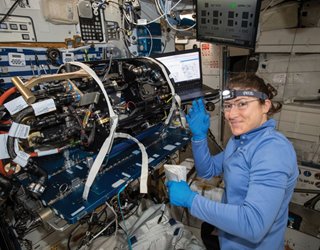
The achievements by NASA astronaut Christina Koch are out of this world—literally. To date, she reached two historic milestones. The first occurred in December 2018 onboard the International Space Station when she broke the record for the longest single spaceflight by a woman, originally set by Peggy Whitson, a former station commander. The second was in October 2019 when she was part of the first all-female spacewalk. Koch holds a bachelor’s degree in electrical engineering and physics and a master’s degree in electrical engineering. Prior to being selected as an astronaut by NASA in 2013, Koch began her career as an electrical engineer at the NASA Goddard Space Flight Center’s Laboratory for High Energy Astrophysics.
Laura I. Gómez—Founder of Atipica
Photo Credit: Art by Alan Lopez for Remezcla
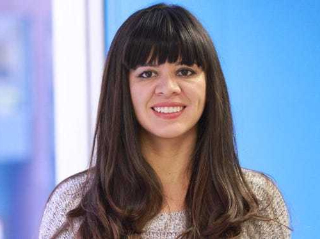
Laura Gómez is a driving force in the technology world as she is inspiring underrepresented women to “Stay true and loyal to your potential—not anyone else’s but your own.” Growing up in Silicon Valley as an undocumented immigrant, Gómez obtained her work permit at the age of 17 and landed an internship at Hewlett-Packard. After experiencing discrimination in the workplace, her first instinct was to leave her job. But her mother knew best. Gómez continued her career in the technology industry and went on to be one of the only Latinas at Google and YouTube. She forged on to become a founding member of Twitter’s international team which eventually led to Twitter expanding their product into 50 languages and dozens of countries. In 2015, she founded Atipica, a venture-backed startup that uses artificial and human intelligence to help companies make bias-free decisions in their hiring processes. Known as the one of the technology industry’s leading ladies, Gómez is involved with several nonprofit organizations and has been recognized for her involvement in the TechWomen Program by the Department of State and Former Secretary of State Hillary Clinton.
Gwynn Shotwell—President and Chief Operating Officer of SpaceX
Photo Credit: The American Society of Mechanical Engineers
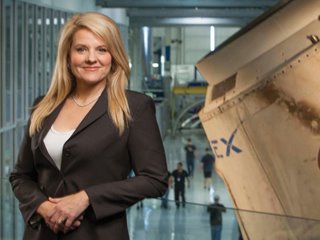
Gwynn Shotwell’s significant contributions to the aerospace industry as president and chief operating officer of SpaceX are leaving a blazing trail of history to the stars. As an American businesswoman and engineer, Shotwell has contributed to the design of reusable rockets, which is catapulting SpaceX to new heights. In 2002, she joined SpaceX as the company’s seventh employee and was hired as vice president of business development. She was promoted six years later to her current position, where she is responsible for managing customer and strategic relations as well as day-to-day operations. Over the years, SpaceX has completed several exciting and successful missions under Shotwell’s guidance. Future endeavors include sending astronauts to the International Space Station and eventually to Mars. Shotwell holds a bachelor’s degree in mechanical engineering and a master’s degree in applied mathematics, with honors.
We hope you enjoyed reading about these fascinating and inspiring women. What inspires you to be your best? A degree from Vaughn College can get you there. Whether your passion is in engineering and technology, management or aviation, Vaughn will be by your side throughout the journey. Apply today!
Want to learn more about International Women’s Day? Check it out here.
WANT TO KNOW MORE?
Simply complete the form below to receive information about Vaughn and get connected with an admissions counselor.

 As a pioneer in her own right, Lysa Scully Leiponis credits her mentor,